
SUSSEX CAROL
On Christmas night all Christians sing, to hear the news the angels bring.” This is a very old joyful Carol, that everyone loves…
SUSSEX CAROL
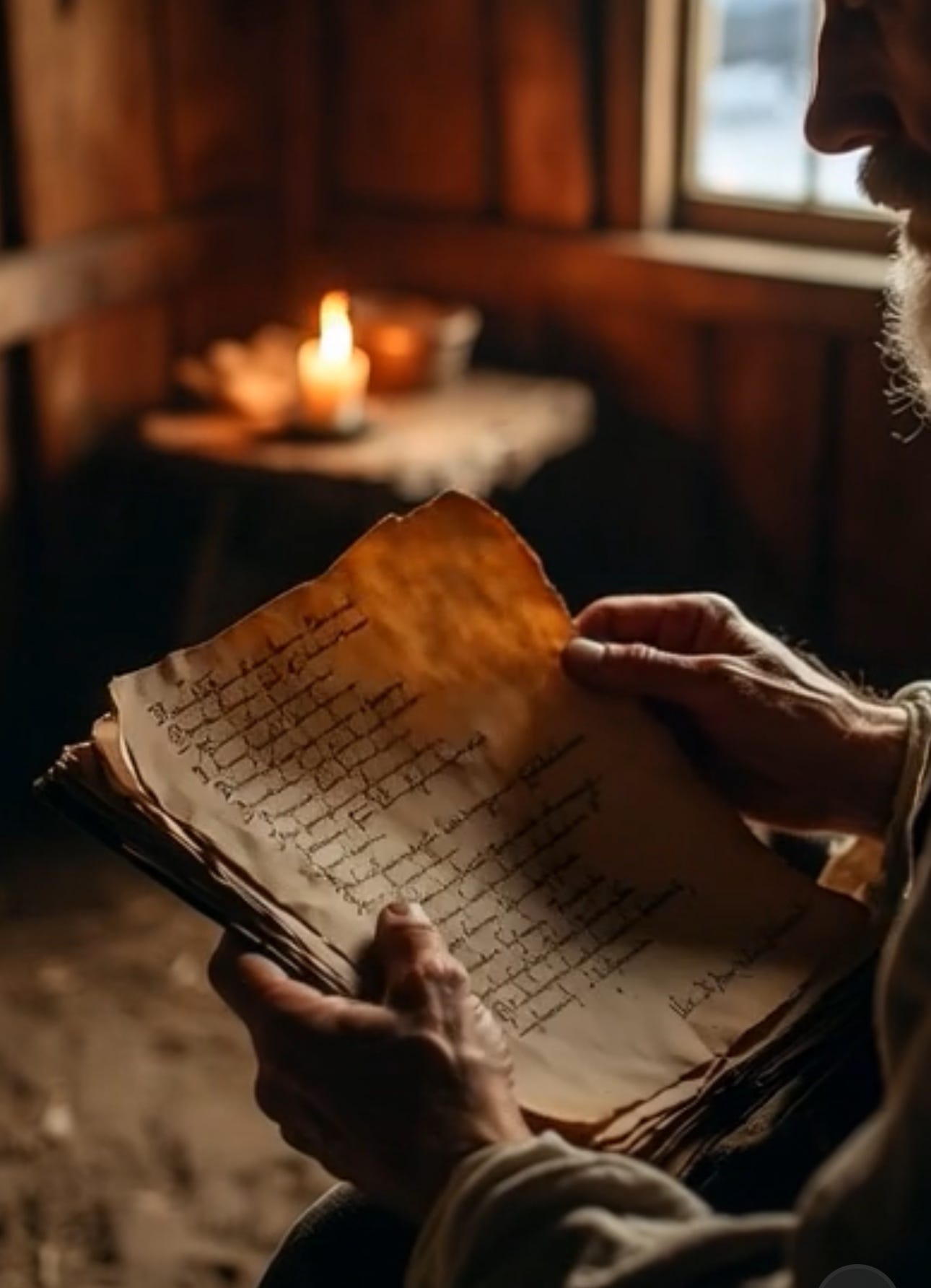
I, Luke Weller, born in the year of Our Lord 1657 in the parish of West Dean near Chichester, set down this account in the forty-sixth winter of my life, being now the 21st day of December in the year 1684, while the memory yet burneth clear.
It was the eve of the Nativity, and I had tarried over-long at Goodwood, where I had been copying a deed for Master Bishop, the steward. The sky was already black when I took the old foot-way across the fields toward my cottage in Singleton, and a shrewd wind came out of the north-east. Snow had threatened all day; now it began in earnest, not great flakes, but a fine powder that hissed against my cloak and stung the face like grains of salt.
I carried a lantern of horn with a tallow candle within, for the moon was hid, and the Down-land paths are treacherous in darkness. My breath smoked before me, and the only sound was the crunch of my boots and the faint clink of the buckle on my shoe.
When I came down into the hollow by Cocking Causeway (the lane men call Blind Lane, because the hedges grow high on both sides), the wind dropped all at once, as though a door had been shut. The silence that followed was so complete I heard the blood beat in my ears.
Then I heard the singing.
It came from no place I could name. Not from the hedges, nor from the sky, nor from the ground, yet it filled all the air. At first I thought it some company of waits upon the road ahead, but the voices were too many, too pure, and too strangely placed, some above me, some below, some on every side, as though the very night had been turned into a quire.
And the words came clear as bells across frost:
On Christmas Night all Christians sing
To hear the news the angels bring…
I stood stock-still. My lantern trembled so that the flame leaped and shadows danced upon the snow. The tune was not one I knew, yet every note seemed older than the Downs themselves, and the voices that bore it were sweeter than any mortal throats in Chichester Cathedral upon Easter morn. There was no organ, no viol, no shawm—only voices, and the harmonies wove in and out like threads of silver.
News of great joy, news of great mirth,
News of our merciful King’s birth.
I felt the hair rise upon my neck, not with terror but with an awe too great for the body to contain. Tears started in my eyes and froze upon my cheeks. I minded me of the shepherds abiding in the fields, keeping watch over their flock by night, and I knew (knew beyond doubting) that the veil between earth and heaven had grown thin as cobweb in that place.
Then feared they not, nor were dismayed,
For lo, the angel of the Lord came down…
I looked up. The falling snow had ceased its hurry; every crystal hung glittering in the air as though time itself had paused. In that stillness the singing went on, verse upon verse, until the final:
Then why should men on earth be sad,
Since our Redeemer made us glad…
And as the last note died (so softly that I know not when it ended), the wind returned, the snow fell thick again, and all was common night once more. My lantern burned steady. My heart beat like a drum.
I went on to my cottage with the words ringing in my head, every syllable perfect, every turn of the tune graven upon my mind as though with a stylus of fire. That same night, before I slept, I took pen and ink and set the carol down just as it was given me, though my hand shook and the letters straggled across the page.
I have never spoken openly of what befell me in Blind Lane, for men would call it fancy or worse. Yet the carol itself hath travelled farther than ever I thought: first sung in our parish, then carried by fiddlers and waits to Midhurst and Petworth, and now, they tell me, even to London. And wheresoever it is sung, folk marvel at its sweetness, never guessing that it came not from any mortal composer, but was lent me for one trembling moment by voices not of this earth.
This is the truth of the matter, as I hope for salvation.
Written with mine own hand in the parish of Singleton, this 21st of December, Anno Domini 1684.
Luke Weller
I confess, I never meant to write a carol that anyone beyond my own village would remember.
It began on a frost-kissed evening, the kind where your breath rises like incense to the sky and every footstep on the hard earth seems to echo. I was walking along the narrow path between Sussex fields, the moon hanging low and pale above me like a lantern in God’s hand.
The night was strangely still—so still that I could hear my own heartbeat beneath my cloak.
And then… I heard singing.
Soft at first.
So soft I thought it might be the wind curling through the yew trees.
But it grew—clear, bright, layered with harmonies I could not quite describe. It felt as though the night itself had opened, and voices were pouring through.
I froze in the road, listening.
“On Christmas night all Christians sing…”
Those were the very first words I heard. Not from any human mouth, but drifting as though carried from a great distance. There was joy in the sound, and relief—like chains breaking, like sorrow melting.
I cannot tell you whether angels sang it, or whether heaven simply allowed the melody to slip out through a crack in the sky. All I know is that it filled me, warmed me, and stirred something ancient in my spirit.
When the last of the voices faded, I hurried home with trembling hands, lighting my candle with more haste than reverence. I sat at my little wooden table—ink pot open, quill shaking—and wrote down the words as I had heard them:
“On Christmas night all Christians sing,
to hear the news the angels bring.”
The rest seemed to flow like water from a spring I did not know existed.
Light triumphing over darkness.
Goodwill rising like dawn.
The world transforming because Christ had entered it.
I wrote until my candle became a stub and finally gave its last breath of flame.
When morning came, and the first rays of winter sun crept across the floorboards, the verses lay before me finished—as though they had always existed and only waited for me to find them.
Later that year, I taught the carol to our village. I stood before a small gathering at the church door, my boots still muddy from walking, my heart still warm from the memory of that holy night. When the people lifted their voices, it felt to me like the echo of the voices I had heard from the heavens.
Even now, years later, I cannot claim the carol as my own. I was only the hearer—the scribe—the witness.
The true Author wrote it long before my birth.
Every time it is sung, I am taken back to that frosted path, that moonlit night, and that moment when heaven bent low enough for a melody to fall upon my ears.
And I pray the same wonder fills the hearts of those who sing it still.